Quinn Baumann · 2 September 2026
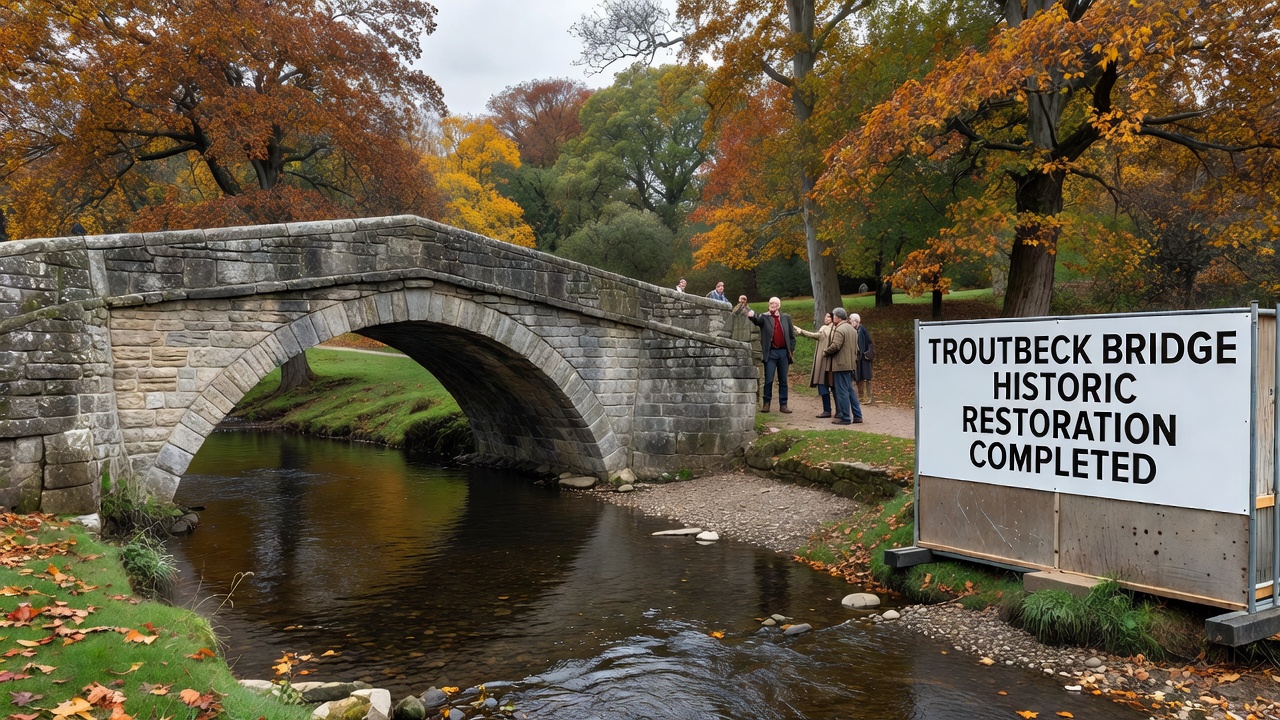
The restoration of Troutbeck Bridge has been completed after two years of meticulous work, preserving a key piece of Troutbeck's heritage. The project addressed structural weaknesses while respecting the bridge's original 17th-century design, ensuring it remains safe for local use.
The Bridge's Historical Significance
Troutbeck Bridge spans the Trout Beck river and has served as an essential link for villagers since the 1600s. Constructed from local stone, it features traditional archways that reflect Lake District building methods of the period. Over centuries, the bridge facilitated trade routes and daily travel, surviving floods and heavy use. Historians highlight its role in connecting isolated farms to the main village, contributing to the area's economic and social development. Deterioration from erosion and weathering prompted urgent intervention to avoid irreversible damage.
Records show the bridge was last significantly repaired in the Victorian era, with modern efforts focusing on minimal intervention. Its listing as a heritage asset underscored the need for specialist techniques to retain authenticity.
Details of the Restoration Work
Funding came from the Lake District National Park Authority and a heritage grant, totaling over £250,000. Engineers used non-invasive methods to repoint masonry, stabilise foundations, and add discreet drainage to combat water ingress. All new materials matched the original stone sourced from nearby quarries. The team avoided modern reinforcements visible to the eye, prioritising aesthetic continuity. Work concluded in late autumn, allowing the bridge to reopen for pedestrians and light vehicles.
Community involvement included consultations with local residents who provided historical photographs guiding the process. A reopening event drew dozens of villagers celebrating the outcome. Officials confirmed ongoing monitoring will protect the structure long-term, safeguarding Troutbeck's heritage for future generations.